
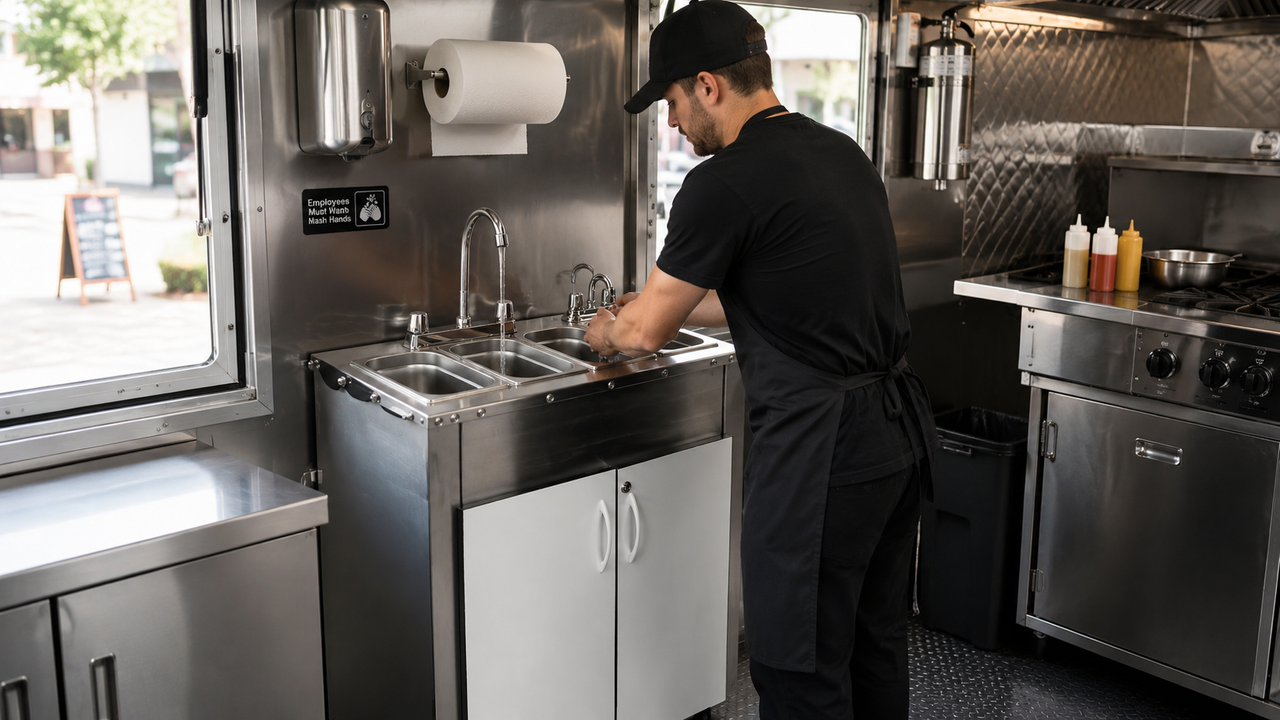
Food Truck and Food Trailer Sink Requirements Depend on Your Operation
Choosing the right food truck sink or food trailer sink is not just about finding a compact product that fits your available space. The type of sink you need usually depends on your menu, how food is prepared, whether you handle unpackaged food, and what your local health department requires.
A coffee trailer, hot dog cart, barbecue food truck, and high-volume food trailer may all need different sink setups. Some businesses may only need a dedicated handwashing sink. Others may need a 3 compartment sink for food truck warewashing, a separate handwashing sink, or a larger setup depending on how staff clean utensils, cookware, and equipment during service.
Because most health departments have their own local rules, there is no single setup that applies to every mobile food business. However, there are common sink types that food trucks and food trailers often use. Understanding these options can help you plan your layout, avoid buying the wrong item, and choose a sink system that supports cleanliness, staff hygiene, and reliable daily operation.
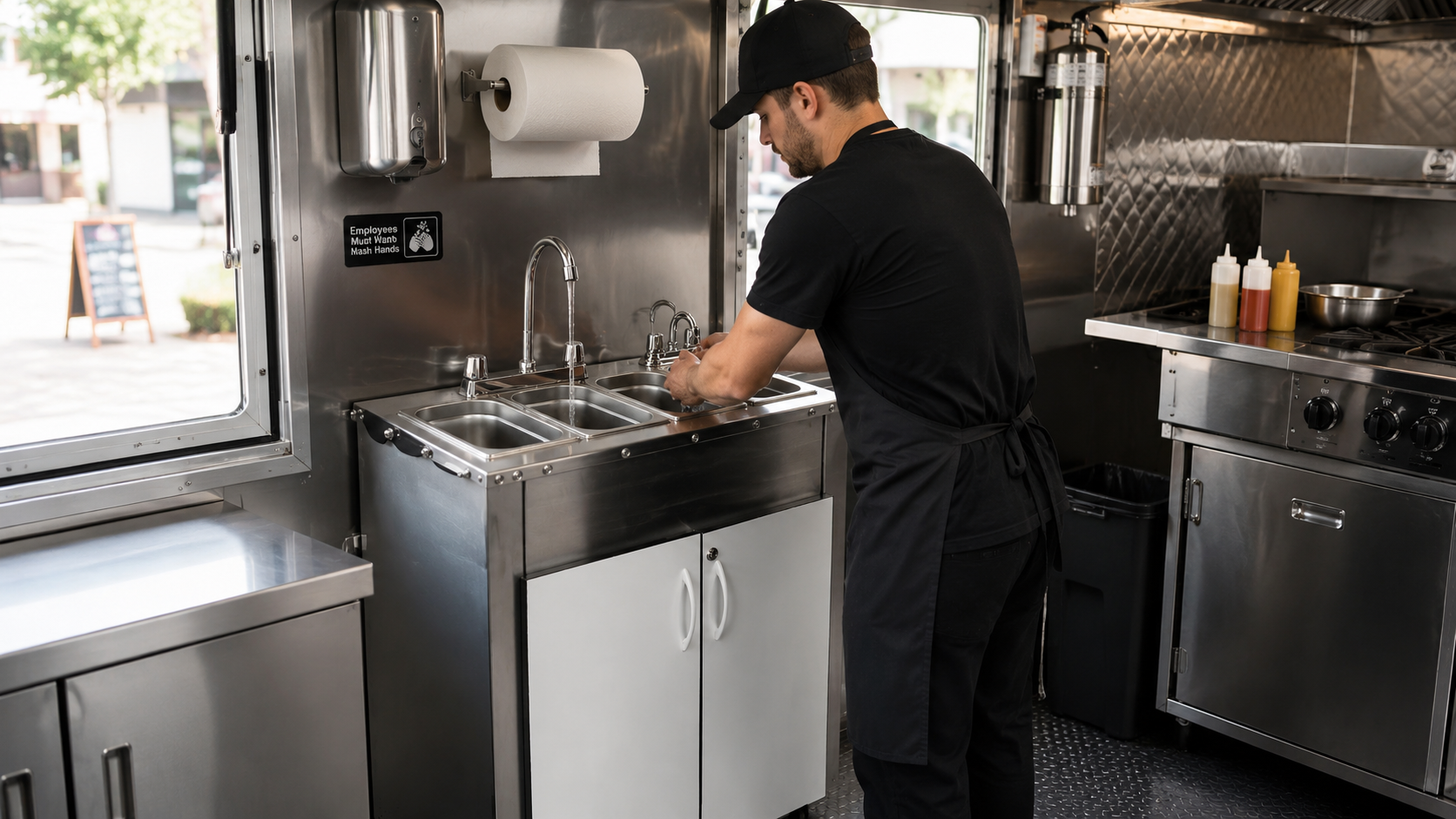
Common Types of Sinks Used in Food Trucks and Food Trailers
Most mobile food units use one or more of these sink types:
- Handwashing sink
- Three compartment sink
- Four compartment sink
- Prep sink
- Portable sink for food truck or trailer use
Each type of sink has a different purpose. A sink used to wash hands should not be treated the same as a sink used to clean cookware or utensils. A warewashing sink should not replace a handwashing station. A prep sink, when required, is usually meant for food preparation tasks rather than handwashing or dishwashing.
The right choice depends on the type of food you serve, your available dimensions, and how your staff move through the truck or trailer during a busy day.
Handwashing Sinks for Staff Hygiene
A dedicated handwashing sink is one of the most essential parts of a food truck or food trailer setup. In many mobile food operations, staff need a clear place to wash hands with running water, soap, and a sanitary drying method such as paper towels.
This sink supports staff hygiene and helps reduce the risk of bacteria spreading from hands to food, utensils, equipment, or surfaces. In a tight mobile environment, this matters because prep space, cooking equipment, storage, and the service window are often close together.
A good handwashing sink should be:
- Easy for staff to reach during service
- Dedicated only to handwashing
- Supplied with water, soap, and paper towels
- Kept clear of stock, storage, or cleaning supplies
- Positioned so staff can use it without moving equipment
The sink itself matters, but placement is just as important. If the handwashing sink is blocked, hidden, or hard to reach during high-volume service, it may not support safe daily habits.
Three Compartment Sink for Food Truck Warewashing
A three compartment sink for food truck use is commonly needed when a mobile food business washes utensils, pans, cookware, or food-contact items on site.
The three basins separate the cleaning process into wash, rinse, and sanitize steps. This helps staff keep dirty and clean items organized during service without relying on one basin for everything.
A food truck three compartment sink is especially important for trucks that cook on site, handle unpackaged food, or use reusable tools and equipment. Before you buy, compare the basin dimensions with the largest item you regularly clean. A compact sink may save space, but it still needs to fit your actual cookware and utensils.
Three Compartment Sink for Food Trailer Setups
A food trailer sink setup may have more room than a small truck, but the same basic planning still applies. If your trailer handles food prep, cooking, or warewashing, a three compartment sink may be required or strongly expected by your local health department.
Food trailers often provide more flexibility because wall space, counter space, and storage areas can be easier to arrange. That extra room can support a better workflow, but the sink still needs to fit the way your staff work during service.
When planning a food trailer sink, consider:
- Where staff will prep, cook, clean, and serve
- Whether the sink blocks movement
- Whether the basin size fits your cookware and utensils
- Where water and wastewater components will be placed
- Whether the setup is easy to clean and inspect
A food trailer may provide more space, but the layout still needs to support cleanliness, reliability, and efficient service.
When a 4 Compartment Sink for Food Truck or Trailer Use Makes Sense
A 4 compartment sink for food truck or trailer use may make sense when the operation needs more separation between cleaning tasks. Some businesses use the extra compartment to support higher-volume service, additional rinsing, pre-soaking, or a layout designed around more demanding food preparation.
The main benefit is flexibility. The main tradeoff is space.
A four compartment sink can be useful for:
- High-volume food trucks
- Busy concession trailers
- Menus that use more cookware or utensils
- Operators who want more separation between tasks
- Businesses with more rigorous cleaning needs
However, you should not assume that a four compartment setup automatically meets every local requirement. Health codes can vary, and the intended use of each compartment should be clear before you order equipment.
Prep Sinks: When They May Be Needed
A prep sink is used for food preparation tasks such as rinsing produce or handling ingredients before cooking. Not every food truck or food trailer needs one, but some operations may require a prep sink depending on the menu.
For example, a business that serves only packaged items may have different requirements from a truck that washes produce, handles raw ingredients, or prepares food from scratch inside the unit.
A prep sink should not replace a handwashing sink or a warewashing sink. Its purpose is different. If your menu requires rinsing, thawing, or ingredient preparation with water, ask your local health department whether a prep sink is required for your setup.
Portable Sink for Food Truck and Food Trailer Applications
A portable sink for food truck or food trailer use can be a practical choice when traditional plumbing is limited or when the business needs a self-contained water system. Portable sink units may include freshwater storage, wastewater storage, a pump, faucet, and hot water capability depending on the product.
Portable sinks can work well for:
- Food trucks with limited plumbing options
- Food trailers with flexible layouts
- Temporary concession setups
- Mobile vending businesses
- Indoor food service events
- Compact spaces where a built-in sink is not practical
A portable sink still needs to be designed for the job. In a mobile environment, the unit may face frequent movement, daily cleaning, water exposure, and regular service demands. Look for heavy duty construction, cleanable surfaces, rust-resistant materials, and components built for durability and reliability.
Hot Water, Water Supply, and Daily Use
Many food trucks and food trailers need access to hot water for handwashing, cleaning, or warewashing. The exact requirement can vary by location, so it is important to confirm what your local health department expects before you buy.
A sink system may need to provide:
- Reliable running water
- Hot and cold water capability
- A faucet designed for frequent use
- Enough freshwater capacity for service
- Wastewater storage
- Secure plumbing connections to help prevent leaks
- A layout that staff can use throughout the day
The sink is only one part of the system. Water supply, drainage, power, tanks, and placement all affect how well the setup works during real service.
Choosing the Right Sink Based on Your Food Business
The best sink choice depends on what your business does each day.
For Simple Packaged Food or Beverage Service
A smaller operation may only need a dedicated handwashing sink if there is little or no food prep, warewashing, or cookware cleaning on site. This still depends on local health codes, so verify before ordering.
For Standard Food Truck Cooking
A typical food truck that cooks or assembles unpackaged food may need a handwashing sink plus a 3 compartment sink for food truck warewashing. This setup supports both staff hygiene and cleaning of utensils, cookware, and food-contact equipment.
For High-Volume Food Trucks
A high-volume operation may need a larger three compartment sink, a 4 compartment sink for food truck use, or another layout that supports faster cleaning and better separation between tasks.
For Food Trailers With More Space
A food trailer sink setup may allow larger basins, better placement, and more flexible use of wall or counter space. The extra room can help, but the sink still needs to fit the total workflow.
For Mobile Vendors With Limited Plumbing
A portable sink for food truck or trailer use may be the better choice when the operation needs a self-contained system with built-in tanks and practical mobility.
Food Truck Sink vs. Food Trailer Sink: Is There a Difference?
People often search separately for food truck sinks and food trailer sinks because they are planning around their specific type of mobile food unit.
The required sink functions may be similar, but the layout challenges can be different.
A food truck usually has tighter space, more compact movement, and less room for storage. Every item needs to fit around cooking equipment, refrigeration, prep areas, and the service window.
A food trailer may offer more room and more flexible dimensions, but it still needs a layout that keeps handwashing accessible, warewashing separate, and cleaning tasks organized.
The difference is not always the sink itself. The difference is often how the sink fits into the total mobile kitchen design.
What to Check Before You Buy a Food Truck Sink
Before you buy a food truck sink or food trailer sink, look beyond the price. The cheapest option may not be the best choice if it does not fit your space, support your workflow, or meet your local requirements.
Check these things before placing an order:
- Required sink type for your menu
- Basin dimensions
- Total product dimensions
- Available wall or counter space
- Hot water requirements
- Freshwater and wastewater capacity
- Faucet type and reach
- Plumbing and pump reliability
- Rust-resistant materials
- Ease of cleaning
- Product documentation
- Replacement parts or support options
A premium sink system should do more than look clean. It should support the daily needs of the business, provide a reliable water source, and hold up through rigorous mobile food service.
Some operators search for “sink food truck” options when they are really comparing handwashing sinks, warewashing sinks, and portable sink setups. The better approach is to pick the sink type based on your menu, space, and local requirements.
Common Mistakes to Avoid
When choosing a sink setup, avoid these common mistakes:
- Buying before confirming local requirements
- Choosing basins that are too small for cookware
- Blocking the handwashing sink with storage or stock
- Forgetting to plan for wastewater
- Assuming a portable sink automatically meets every rule
- Choosing materials that may rust or wear too quickly
- Ignoring access for cleaning and repairs
- Focusing only on price instead of long-term lifespan
A good sink setup should make service easier, not create problems during a busy day.
FAQ: Food Truck and Food Trailer Sinks
Q: Do I need a 3 compartment sink for a food truck?
A: Many food trucks that wash utensils, cookware, or food-contact equipment on site may need a 3 compartment sink. This allows staff to separate washing, rinsing, and sanitizing tasks. Requirements vary, so confirm with your local health department before buying.
Q: Is a three compartment sink for food truck use different from a regular commercial sink?
A: The function is similar, but a food truck three compartment sink usually needs to fit a compact mobile layout and work with onboard water, wastewater, and power systems.
Q: Do food trailers need the same sinks as food trucks?
A: Food trailers may need similar sink functions, such as handwashing and warewashing, but the layout and available space may be different. A food trailer sink setup may allow for larger basins or more flexible placement.
Q: When should I consider a 4 compartment sink for a food truck?
A: A 4 compartment sink for food truck or food trailer use may make sense for high-volume operations, extra cleaning needs, or setups that require more separation between tasks. Always verify whether the configuration meets your local health codes.
Q: Can I use a portable sink for food truck service?
A: A portable sink for food truck use can be a good option when you need a self-contained system. However, it still needs to meet the requirements for your operation, including water supply, wastewater storage, hot water, and accessibility.
Q: What should I check before buying food truck sinks?
A: Start with your local sink requirements. Then check the sink type, basin dimensions, total dimensions, hot water capability, faucet design, water capacity, material durability, and whether the setup supports your real workflow.
Build a Food Truck or Food Trailer Sink Setup That Supports Daily Service
The right food truck sink or food trailer sink depends on your menu, workflow, space, and local health department requirements. Some businesses may only need a handwashing setup, while others may need a three compartment sink for food truck warewashing, a dedicated hand sink, or a four compartment option for more demanding service.
Before you order, confirm what is required in your city or state, measure your available space, and think through how staff will actually use the sink during service. A well-planned sink setup supports cleanliness, staff hygiene, compliance, and smoother daily operation.
At Waterworks Concession Sinks, we provide portable sink and concession sink options designed for mobile food businesses, including food trucks, food trailers, vending carts, concession stands, and other service environments where clean water access matters. Explore our website to find a sink setup that fits your space, supports daily service, and helps your business stay prepared for operation.